Solo Founder vs Co-Founder: Can You Build an MVP Alone?
Most MVPs do not need two founders on day one. They need five jobs covered: problem insight, product judgment, build, distribution, and enough runway…
BLOG
Product updates, engineering deep dives and notes from the field — written by people who actually ship the code.
Subscribe and get one new post about code, design and shipping — straight to your inbox. No filler, no growth hacks.
You're almost in. Check your inbox to confirm.
No spam. Unsubscribe anytime.
STARTUPS
Five steps for a non-technical solo founder: GitHub, an AI coding agent, Next.js, Supabase, Vercel. Vibe-code an MVP and ship with git push as your deploy pipeline.
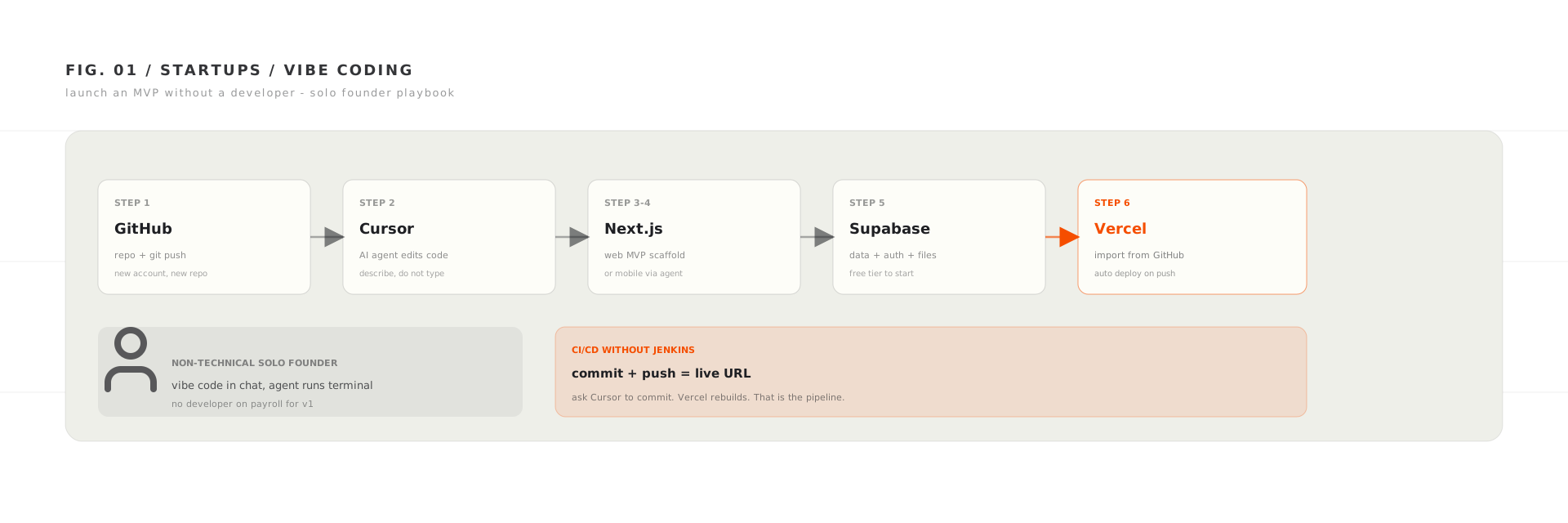
FIG. 01 ·Startups — June 24, 2026
A non-technical solo founder can ship an MVP in 2026 with vibe coding: GitHub → AI coding agent → Next.js (or mobile tooling) → Supabase → Vercel, then commit and push for auto-deploy.
If you have never been near software development, you will still have to pick up new basics: repos, deploy URLs, env vars, and how to steer an agent without pretending you read the code. That learning curve is real. The path below is still the fastest one I know without hiring a developer first.
GitHub stores your project in git. That matters for two reasons: you will not lose work on a laptop crash, and the moment you bring in a contractor or co-founder, they can clone the same repo.
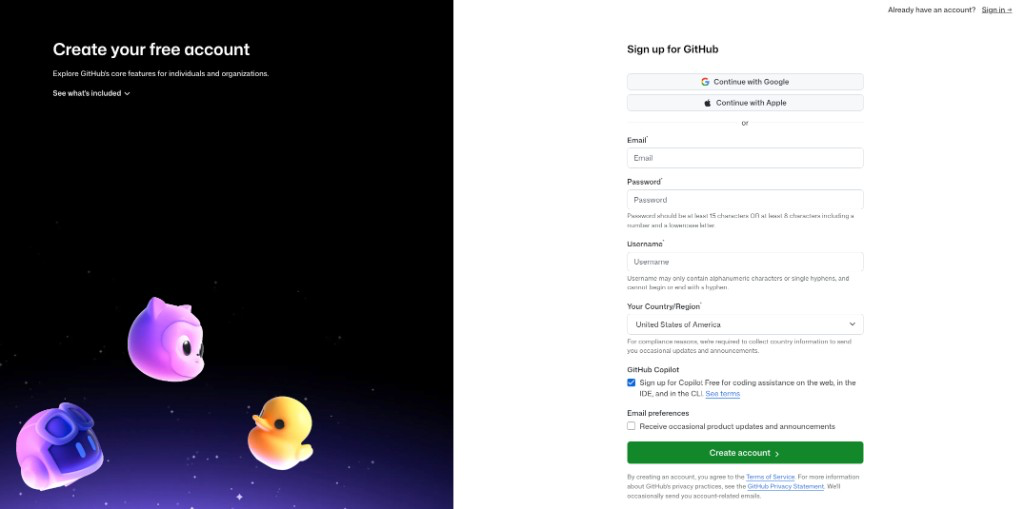
Signup is free. You do not need to understand git on day one. The agent in step 2 will run the commands for you later.
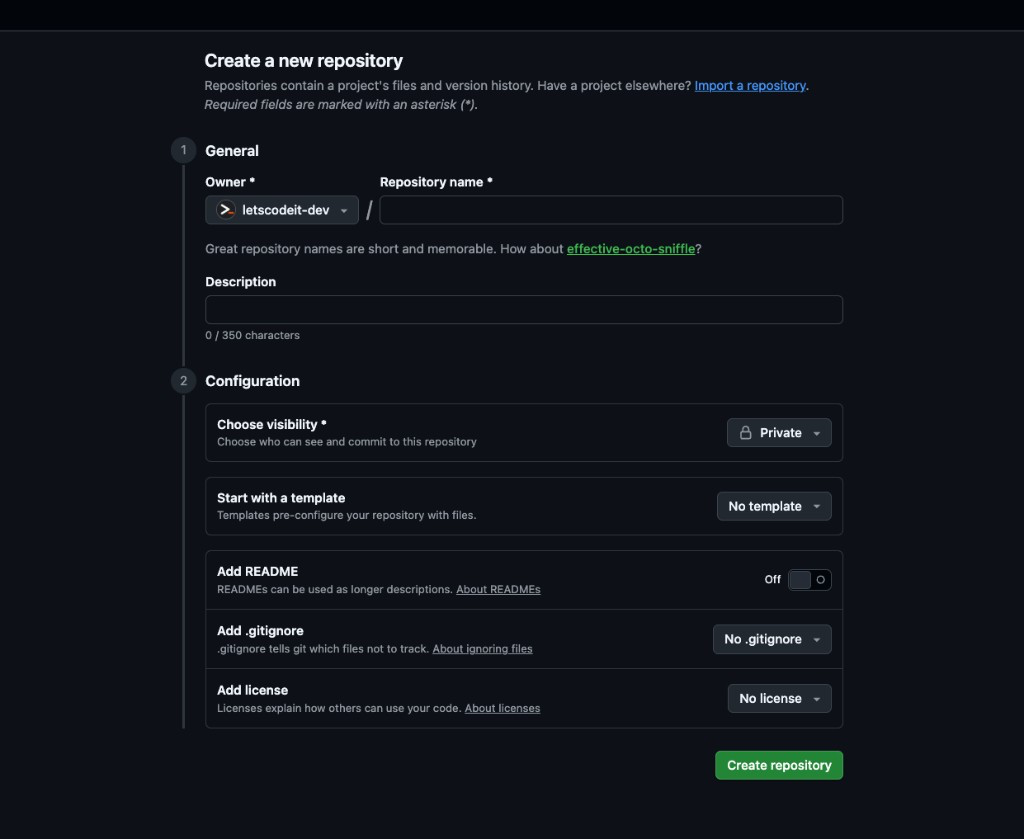
After signup, open New repository. Pick a name, leave Private if you are not ready to go public, and click Create repository. Defaults for README, .gitignore, and license are fine; the agent can add those when it scaffolds the project.
Install a code editor or CLI that can edit files in a local project through chat. Options change fast: Claude Code, GitHub Copilot in VS Code, and similar agent tools all work for this playbook. You type what you want; the agent edits files on your machine.
Start on a free or trial tier if you can. Paid plans help once you are iterating daily. For an MVP spike, free is often enough.
Open a new chat in the project folder, and use agent mode (or the equivalent that can create and change multiple files) when you want scaffolding done for you.
Most MVPs can start in a browser. If that is true for you, skip to step 4 and use Next.js.
If the product is a mobile app (users live on the phone, not on a marketing site), Next.js is the wrong first step. Describe the idea in chat: what the app does, iOS or Android or both, and that you are non-technical.
Ask the agent to install the dev tools you need on your machine and scaffold the project. A typical prompt: "I want to build [idea] as a mobile MVP for iOS and Android. I am a beginner. Install everything required (Node, Expo or React Native tooling, simulators) and create the starter project."
The agent can run installers and terminal commands you would not run alone. On Mac, iOS builds eventually need Xcode; Android needs Android Studio or an emulator the agent configures. Week-one goal is a build that runs in a simulator, not App Store submission.
Mobile still pairs well with Supabase in step 5 for auth and data. Step 6 (Vercel) is web only. For mobile, "deploy" means a test build (Expo Go, TestFlight, or an APK you share manually) until you are ready for store review.
Heavy compliance (health, finance, kids), offline-first hardware, or hard real-time at scale: budget a human review early. Vibe coding gets you a demo; it does not replace lawyers or senior mobile engineers.
For a web MVP, ask the agent to create a project with Next.js. Say you want the App Router and TypeScript. One sentence is fine: "Create a new Next.js app in this folder with a simple landing page for [your product]."
Next.js is a practical default: large community, plenty of examples for the agent to mimic, and server rendering so public pages can rank in search. If you care about organic traffic later, structure matters early; see what GEO is and what gets you cited for how discoverability works in 2026, not just classic SEO checklists.
Let the agent run npm install and npm run dev. Open http://localhost:3000 in your browser. If you see your page, you have a working app locally.
For a database and user accounts without running your own server, use Supabase. The free tier is enough to start. It gives you Postgres, auth helpers, and Storage (S3-style buckets for uploads).
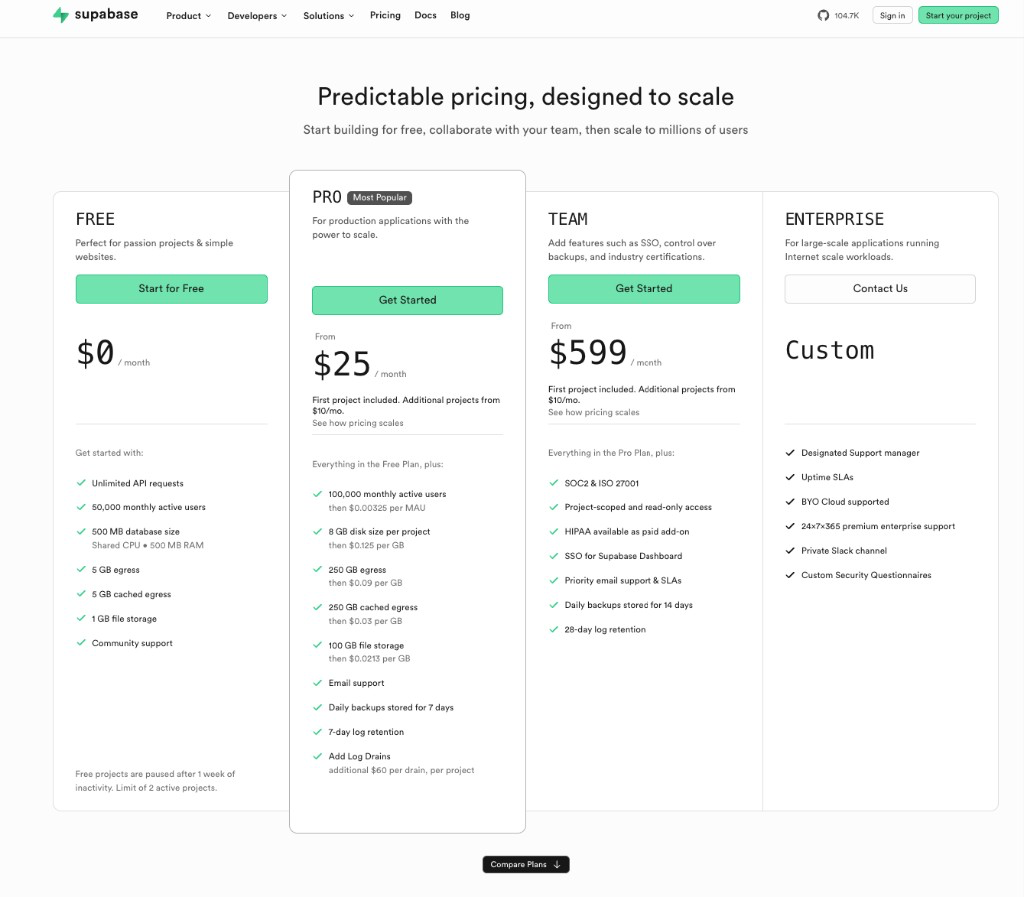
Click Start for Free on the Free plan, then create a project in the dashboard.
Ask the agent to connect Supabase: copy the URL and anon key into .env.local, and wire a simple table or signup flow. Keep v1 tiny: one table, one form, one read path.
Do not paste service-role keys into chat. Use .env.local for secrets and add .env.local to .gitignore (the agent usually does this; double-check).
Vercel hosts Next.js with almost no config. Sign up, Import your GitHub repo, approve the defaults, and deploy. Vercel builds the app in the cloud and gives you a public URL.
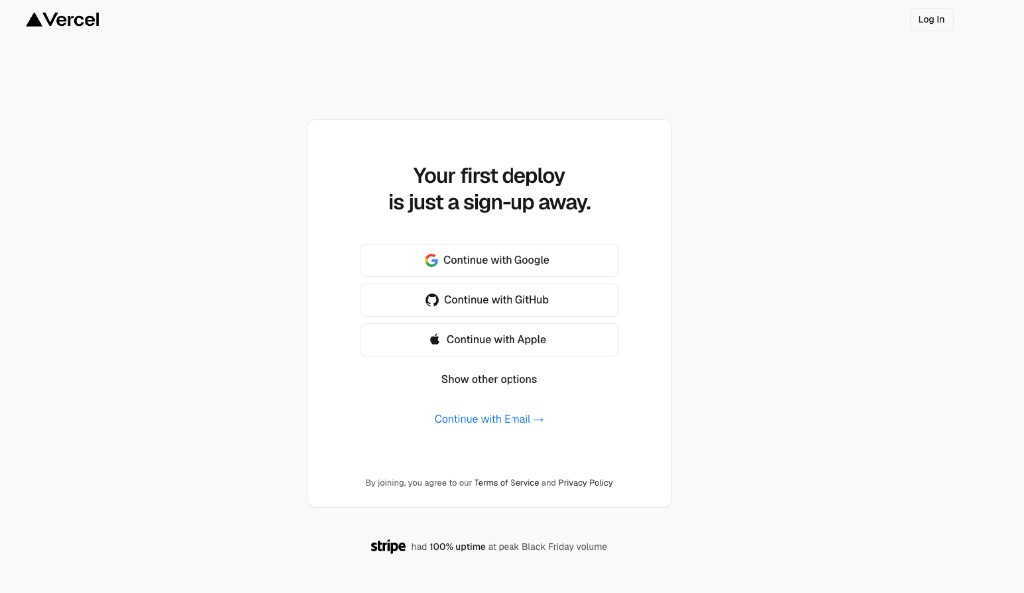
Use Continue with GitHub so Vercel can read the repo you pushed in the previous steps.
On the New Project screen, find your repo under Import Git Repository and click Import. Accept the default framework settings for Next.js and deploy.
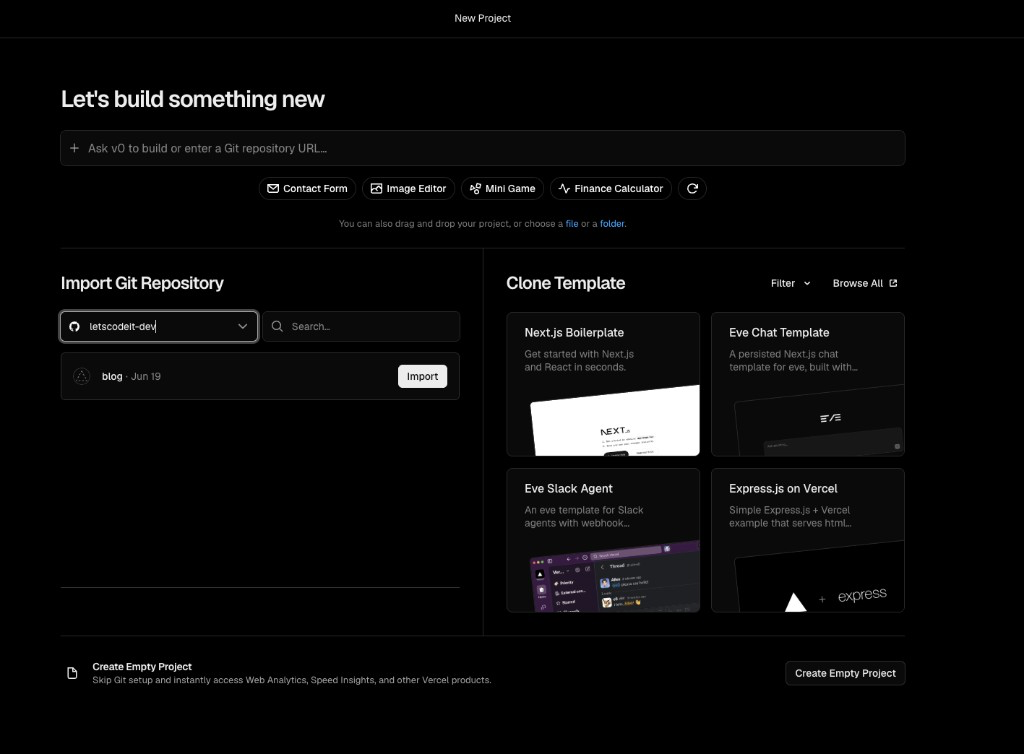
Add the same Supabase env vars in the Vercel project settings (Settings → Environment Variables). Redeploy once after you add them.
From here, every push to your main branch triggers a new production deploy. You do not need a separate CI/CD product for a first MVP.
When you change copy, add a page, or fix a bug, describe the change in chat. The agent edits the files. Then ask it to commit and push to GitHub.
Example prompt: "Change the hero headline to X, then commit and push to main."
That is your pipeline on web: edit with the agent → push → Vercel deploys. You set up continuous delivery without hiring anyone to configure Jenkins.
Vibe coding gets you online. It does not replace product judgment, pricing, or finding ten users who care. If the agent ships fast but nobody wants the product, you still need to change the idea, not the framework.
If the product is more complex or domain-specific than a landing page, a login, and one data table (deep integrations, regulated data, real-time systems, hardware), solo vibe coding stops being a time saver. You spend weeks learning concepts a technical co-founder already owns. In that case, finding a technical co-founder or hiring a senior contractor is usually cheaper than teaching yourself the hard parts on the critical path. See solo founder vs co-founder for when to stay solo, when to split equity, and the risks of building alone.
For a real site built this way on the same stack, see GitHub as a CMS with Next.js.
Most MVPs do not need two founders on day one. They need five jobs covered: problem insight, product judgment, build, distribution, and enough runway…
Subscribe and get one new post about code, design and shipping — straight to your inbox. No filler, no growth hacks.
You're almost in. Check your inbox to confirm.
No spam. Unsubscribe anytime.
No comments yet. Be the first to share your thoughts.
Comments