·
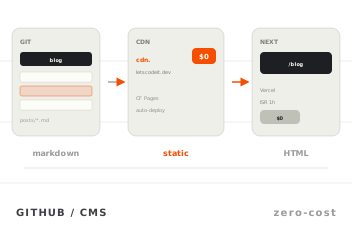
We publish letscodeit.dev blog posts from a separate GitHub repository. The Next.js app fetches markdown at runtime with a one-hour cache,…
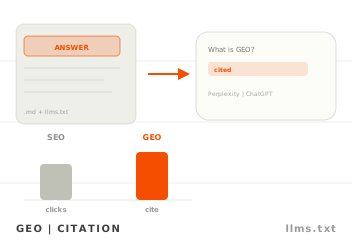
GEO (generative engine optimization) is how you structure and publish content so AI chatbots and answer engines quote your pages when…
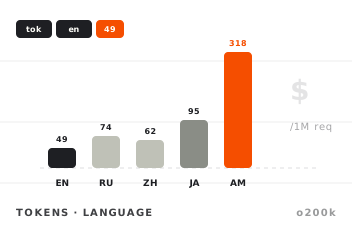
When you send a message to an LLM, you are not paying for characters or words. You pay for tokens . A token is the unit the model splits…
GitHub introduced a method for converting large AI-generated pull requests into manageable, ordered stacks using stacked pull requests.
This approach involves teaching coding agents to break down tasks into smaller, sequential changes. The stacked pull requests help in organizing the code into a clean and reviewable format, improving the review process. This method ensures that each change is isolated and easy to evaluate, facilitating more efficient code reviews.
Source: github.blog
Comment deleted
I've been using stacked PRs for a while now, and they definitely make the review process more efficient. It's a great way to handle complex changes.
While stacked PRs sound useful, isn't this just adding complexity to the workflow? What if the AI can't break down tasks effectively?
Comments