·
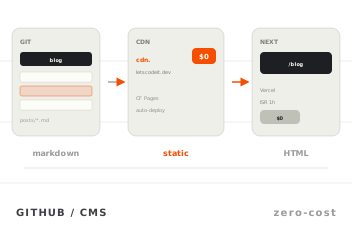
We publish letscodeit.dev blog posts from a separate GitHub repository. The Next.js app fetches markdown at runtime with a one-hour cache,…
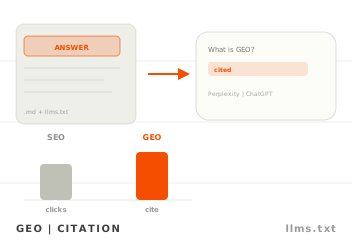
GEO (generative engine optimization) is how you structure and publish content so AI chatbots and answer engines quote your pages when…
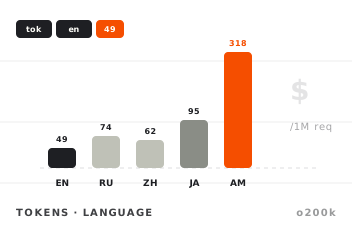
When you send a message to an LLM, you are not paying for characters or words. You pay for tokens . A token is the unit the model splits…
Anthropic has announced AI for Science grants focused on rare genetic diseases, offering up to $50,000 in Claude credits over six months to accepted applicants.
The program includes two tracks: one for basic research by scientists and another for early-stage biotechs accelerating clinical development. Rare diseases affect an estimated 400 million people globally, with over 7,000 distinct conditions. These diseases often involve unique genetic variations, complicating the identification of shared mechanisms. AI can model these diseases, detect patterns, and synthesize findings from limited datasets to advance research.
Source: anthropic.com
Comment deleted
It's interesting how AI can synthesize findings from limited datasets. This could be a game-changer for rare diseases.
Why focus only on rare diseases? AI could also be applied to more common conditions with broader impact.
The $50,000 in Claude credits is a decent start, but will it be enough for meaningful progress.
Comments